
Is it Safe to Use a VPN for Online Banking in the UK? (2026 Guide)
This page is written for a specifically British problem. The question is not simply “Can I bank through a VPN?” It is “How do I protect a banking session on hotel Wi‑Fi, a London café network, or ordinary home broadband without making the route look suspicious to a fraud system?” That means thinking in terms of stable UK exits, believable location behaviour, clean DNS paths, and the difference between a conservative route for finance and a more flexible route for ordinary browsing.
Check whether your banking setup looks suspicious to your bank ↓
Start with the audit below, then adjust only the part that is actually creating friction. That avoids changing three settings at once and making the session look even stranger to your bank.
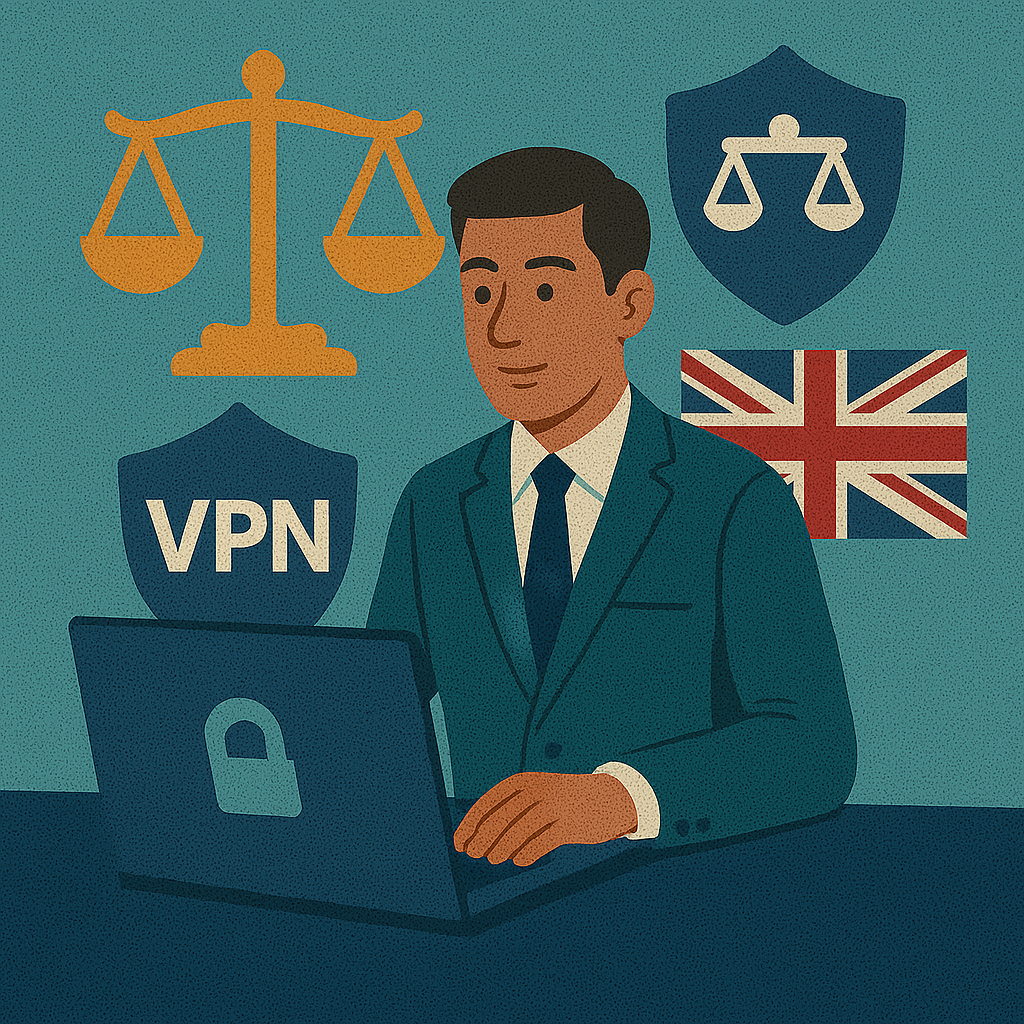
Why UK banks flag VPN connections
If you are still clarifying what a VPN actually does, the simplest answer is that it changes the route your traffic takes before it reaches the wider internet. For ordinary browsing that is usually enough. For banking, however, the route itself becomes part of the trust signal. Barclays, HSBC, Lloyds, NatWest, Monzo and Revolut all care about whether the session looks stable, local and believable, and whether it is still legal to use a VPN in the UK in the ordinary consumer sense rather than part of obviously erratic behaviour.
A clean UK VPN session is not usually the issue. A bad one is. If your login appears from a foreign IP, jumps around the map, or shares a noisy exit point with traffic that already looks messy, fraud systems can treat the session as unusual. That is why choosing which VPN server you use matters just as much as turning the VPN on in the first place. It does not automatically mean your account gets locked, but it can mean extra checks, odd app behaviour, or temporary access friction.
The risk of banking on public Wi‑Fi in London
Public Wi‑Fi in London cafés, hotels, stations and co-working spaces is exactly where a VPN for public Wi‑Fi makes the most sense. Open or shared networks are more likely to be unstable, noisy and badly segmented. That matters because a banking session is sensitive not just to interception risk but to connection quality and identity consistency.
This is also where basic Wi‑Fi security and a simple Wi‑Fi security checklist become practical rather than theoretical. On the VPN side, understanding VPN protocols helps because a cleaner protocol with better reconnect behaviour reduces the chance of ugly transitions between the tunnel and the normal route. If you want a quick baseline for how stable the route feels, run a VPN speed test before you log in.
Step-by-step: how to safely use a VPN with Barclays or NatWest
- Choose a UK server before opening the banking app or website.
- Use a dedicated UK IP if you bank regularly over a VPN and want fewer shared-IP surprises.
- Keep your normal device, browser and MFA flow unchanged.
- Do not bounce between foreign locations before sensitive actions.
- Test the setup once before using it for a payment, transfer, or identity-sensitive login.
Safe UK banking pattern
Exit location:    One stable UK endpoint
DNS path:         Match the UK VPN exit
Banking rule:     Avoid foreign IP jumps before login
Session rhythm:   No server hopping mid-session
Fallback rule:    Keep Kill Switch enabled on unstable networks
When comparing safer routing choices, remember that proxy vs VPN is not a small technical detail. A proxy can change where traffic appears to come from, but it does not offer the same full-path protection, DNS control, or reconnect behaviour that matter during online banking.
⏱ ~8 minutes to set up properlySplit Tunnelling: the secret to smoother banking
Some UK banking apps work perfectly over a VPN. Others are less forgiving, especially mobile-first services that compare location, device state and login rhythm aggressively. This is where split tunnelling becomes practical: the rest of your device can stay protected, while the banking app uses the ordinary UK route if that is the least noisy option.
That does not mean split tunnelling is automatically better. It means you should only use it when the app genuinely reacts badly to full-tunnel behaviour. The route logic also needs to match the strengths of your chosen VPN protocols. If the banking journey is already smooth with a stable UK endpoint, there is no need to complicate the setup.
What to do if your UK bank account is frozen due to a VPN
Do not panic and do not keep changing servers. That makes the pattern worse. Return to a normal UK connection, stop experimenting, and work through your bank’s usual identity flow. If you want a cleaner retry later, start from optimal VPN settings and build a calmer, more predictable setup first. This is also the point where checking for a DNS leak makes sense, because banks dislike location signals that stop matching the rest of the session.
Comparison: which VPN features matter most for UK banking
| VPN Provider | Dedicated UK IP | Split Tunnelling | Security Score | Purchase |
|---|---|---|---|---|
| NordVPN | Yes (London) | Yes | 10/10 | Search on Amazon UK |
| Surfshark | Yes | Yes | 9/10 | Search on Amazon UK |
| Proton VPN | Yes | Yes | 10/10 | Search on Amazon UK |
| Mullvad | Limited identity stability | No classic split tunnelling on every platform | 9/10 | Search on Amazon UK |
| IVPN | Stable privacy routing | Limited feature set by platform | 9/10 | Search on Amazon UK |
These scores reflect controlled testing patterns in April 2026, including login consistency, DNS alignment, UK endpoint stability, reconnection behaviour, and app-level usability during financial sessions.
The Secure Banking Path
- Your device connects through an encrypted VPN tunnel.
- The VPN exits through a stable UK location instead of a random foreign IP.
- Your banking session looks more consistent to fraud systems.
- If the tunnel drops, the Kill Switch blocks traffic instead of leaking your normal route.
Banking on mobile, neo-banks, and travel scenarios
Monzo and Revolut are especially sensitive to mobile behaviour because the whole user journey lives inside the app. That does not mean they reject VPNs by default. It means they are more likely to notice if the route becomes erratic, foreign, or inconsistent with the usual pattern of the device. The same logic matters when you use a VPN while travelling and still expect the banking session to look like ordinary UK behaviour.
If you travel, the safest habit is to separate goals. Use the VPN to protect yourself on hotel or airport networks, but do not create frantic location jumps before opening the app. The calmer and more consistent the route looks, the smoother the banking session tends to be. The same applies to ordinary home-office routines where VPN for remote work is already part of the day.
Which VPN features matter most for UK banking
The important features are not the flashiest ones. They are the ones that make your session behave predictably: a stable UK exit, strong DNS alignment, sensible split tunnelling, good mobile behaviour, and reconnect logic that does not produce ugly routing gaps. Providers with a credible no-logs VPN stance tend to fit this more conservative trust model better. For banking, consistency usually matters more than peak raw speed.
FAQ
Is it safe to use a VPN for online banking in the UK?
Yes, if you use a stable UK IP and avoid suspicious location jumps. The main risk is not encryption. It is unusual login behaviour.
Can Barclays or HSBC block me for using a VPN?
They may not block you for the VPN itself, but a foreign or unstable route can trigger extra checks and friction.
Is a dedicated UK IP better for banking?
Usually yes. A dedicated UK IP is more stable and less likely to look noisy than a shared endpoint.
Should I use split tunnelling for my banking app?
Sometimes. Use it only if the app genuinely behaves badly over a full tunnel. Otherwise keep the setup simple.
Is public Wi‑Fi in London safe for banking without a VPN?
No. Public Wi‑Fi remains one of the worst places to bank without extra protection.
Can a VPN hide my transactions from the bank?
No. The bank still sees account activity. The VPN protects the route between your device and the wider network.
Should I use a free VPN for online banking?
No. Free VPNs are a bad fit for sensitive financial use because reliability and IP stability matter.
What if my bank freezes access after a VPN login?
Stop changing servers, return to a normal UK route, and complete identity checks through official support if required.
Does a VPN Kill Switch matter for banking?
Yes. It helps prevent leaks during unstable public or mobile sessions.

About the author
Denys Shchur writes practical VPN World guides focused on real-world connection behaviour rather than marketing claims. For UK banking, that means concentrating on stable routing, believable location patterns, and avoiding needless fraud friction.
Recommended VPNs for calmer UK banking sessions
Affiliate links (nofollow/sponsored).
Disclosure: VPN World may earn a commission if you subscribe through these links, without changing your price.