
Best VPN for Students in the UK 2026: Save Money & Stay Secure
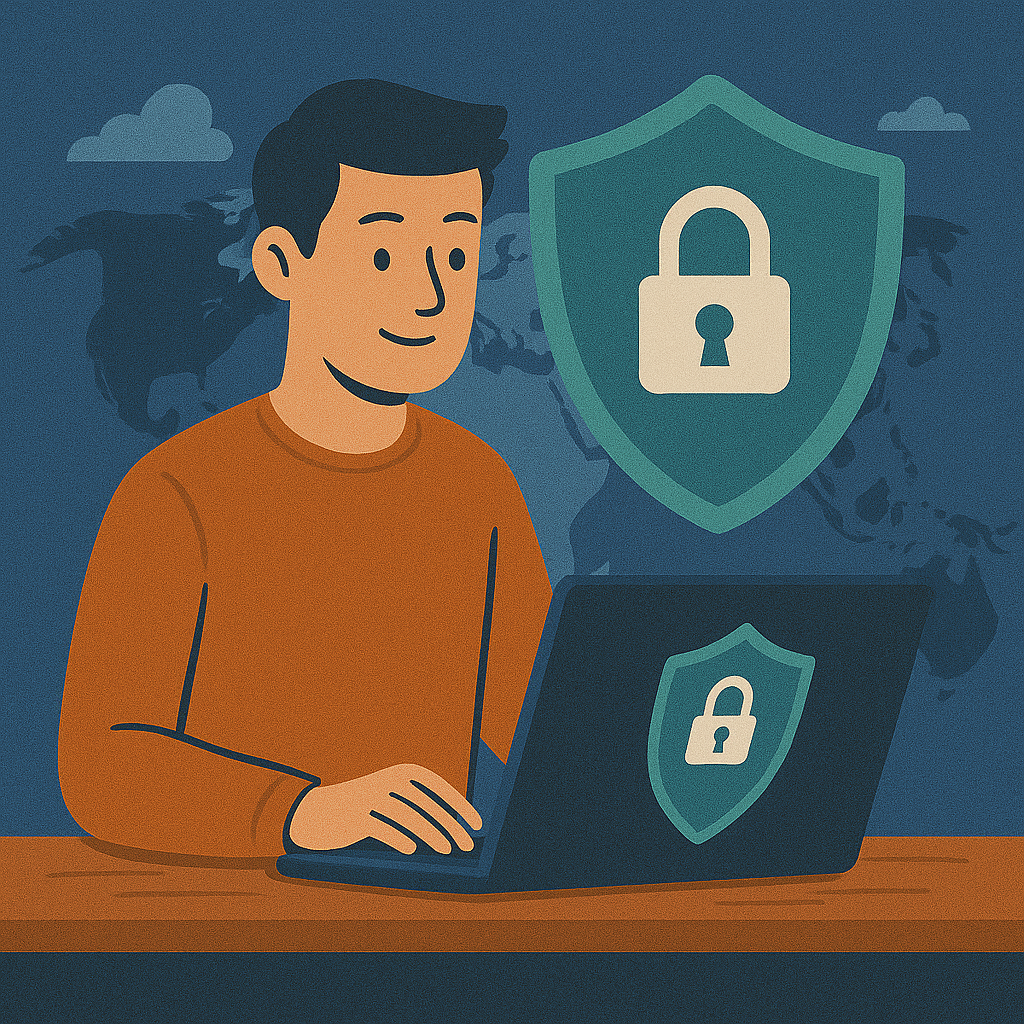
This guide explains when a VPN genuinely helps and when a poor setup creates more friction than value. On UK student networks, the real aim is a route that feels stable enough for research, streaming, library logins, and shared accommodation use — not a messy tunnel that confuses uni IT, your browser, and your phone at the same time.
Check whether your current uni network can handle a VPN properly ↓
Need a stable VPN for halls, Eduroam, and study abroad?
For student life, the smartest choice is not “the most features”. It is a clean UK route, decent speeds on crowded Wi-Fi, a reliable VPN Kill Switch, and a setup that does not turn revision week into network troubleshooting.
Affiliate disclosure: these are sponsored links with no extra cost to you.
Why UK students need a VPN on campus
If you want the shortest possible explanation of what a VPN actually does, it adds an encrypted route between your device and the wider internet. For students, that matters because Eduroam, shared accommodation, and public library Wi-Fi are all networks you use but do not fully control.
At a Russell Group campus or a local uni library, the connection itself may be strong while the policy layer is not. Filtering, shared IP ranges, and awkward traffic handling can make ordinary browsing, cloud sync, and study tools behave strangely. A clean student VPN reduces that exposure and gives you more control over how your traffic looks to the network.
It also helps when your connection changes shape during the day — lecture theatre to café, campus to halls, or campus to year-abroad accommodation. If you care about consistent security, streaming, and a lower chance of DNS weirdness on busy shared networks, a modern VPN with a stable UK route is much easier to live with than improvising every time a network behaves oddly.
Saving money: how to get the best student VPN deals via UNiDAYS
Students often overpay because they buy the first flashy offer they see. Before paying, compare renewal terms, total contract length, and whether the provider actually gives you the features you need on UK student networks.
That means checking whether pricing still makes sense after the introductory period, whether the app is stable on a student laptop and phone, and whether your own optimal VPN settings are easy to manage without constant tweaking during term time.
UNiDAYS and similar promotions can help, but the cheapest sticker price is not always the best student deal if the provider collapses on Eduroam, throttles on packed hall Wi-Fi, or wastes your evening with endless reconnects.
Accessing UK content while studying abroad
For a year abroad, a student exchange, or even a long summer trip, the streaming angle becomes practical very quickly. Many students want a VPN partly because they want BBC iPlayer to work cleanly from overseas, and partly because they still need familiar research and banking access tied to a UK route.
Before you rely on that setup, run a quick VPN speed test and see whether the route is actually stable enough for normal evening use. The same habit helps when you need UK banking on a VPN while abroad, because route stability matters as much as raw encryption.
The practical question is not “can a VPN unblock things in theory?” It is whether your session remains calm, fast enough, and believable under ordinary student conditions like residence Wi-Fi, borrowed networks, or hotel access abroad.
Security in shared accommodation
Shared accommodation is where a student VPN stops being an abstract privacy tool and becomes basic hygiene. Flat Wi-Fi is often overloaded, loosely managed, and full of devices that you did not choose and do not trust.
If you already think in terms of a VPN for public Wi‑Fi, the same logic applies in halls of residence and shared flats. The difference is that you use the network every day, which makes routine weaknesses easier to forget.
That is why plain Wi‑Fi security still matters: strong passwords, updated devices, and a VPN that does not leak traffic during short drops. On crowded evening networks, a Kill Switch and steady DNS route can matter more than a long list of marketing features.
Is it legal to use a VPN at a UK university?
In ordinary circumstances, yes. The legal question is less dramatic than students often imagine. The practical question is whether your use stays aligned with university policy, acceptable-use terms, and the way a specific network is managed. A provider with a sensible no-logs VPN stance can help protect routine privacy, but it does not override campus rules.
That matters most on Eduroam, managed hall networks, and library systems where traffic controls may exist for safeguarding, abuse prevention, or bandwidth management. A VPN is usually fine as a protective transport layer, but it should not be treated as a workaround for prohibited behaviour, account sharing, or anything your uni IT policy clearly forbids.
The practical student rule is simple: use a VPN to protect your connection, not to fight your institution. If a campus service breaks, check the acceptable-use guidance first, then test a calmer setup before assuming the network is hostile.
Student discounts & features 2026
| VPN Provider | Student Discount | UK Servers | Best For | Price (Est.) |
|---|---|---|---|---|
| NordVPN | Up to 75% Off | 440+ (London) | Bypassing Eduroam friction | £2.49/mo |
| Surfshark | 85% Off + 2 mo | 4 Cities | Multiple devices in halls | £1.89/mo |
| Proton VPN | Free version | Yes | Privacy & research | £0.00 (free tier) |
| Mullvad | No classic student discount | UK options | Simplicity | £4.50/mo |
| IVPN | No major student promo | UK routing | Privacy-first users | £4.20/mo |
These figures are indicative UK student-style comparisons for April 2026. Actual offers can vary by campaign, region, device bundle, or promotional eligibility.
The Campus Security Shield
- Your device connects through an encrypted VPN tunnel.
- The university filter sees traffic that looks less suspicious or less readable than plain browsing.
- Obfuscation helps certain restrictive networks treat the connection more like regular HTTPS.
- The result is better privacy, fewer blocks, and a cleaner path to research or streaming access.
Public library and café Wi‑Fi: what changes?
Public library and café access tends to be simpler than Eduroam, but it is not automatically safer. The difference is that these networks are less about university policy and more about ordinary shared-network risk.
That is where proxy vs VPN becomes a useful distinction. A proxy can shift location, but it does not give you the same all-round protection for student accounts, cloud notes, and browser sessions on networks full of strangers.
Which VPN features matter most on UK student networks
A big feature list means very little if the basics fall apart on a busy campus. Students need a setup that reconnects cleanly, handles shared Wi‑Fi without drama, and stays fast enough for study, calls, and streaming.
That is why optimal VPN settings still matter, even for beginners. A few quiet adjustments can do more for daily reliability than a dozen flashy extras you never touch.
It also helps to keep an eye on a simple VPN speed test before you blame the university network for every slowdown. Sometimes the issue is the current server or protocol rather than the campus itself.
Frequently asked questions
Does a VPN work on Eduroam?
Usually yes, although the exact behaviour varies by campus, protocol, and how strict the local filtering is.
Is it legal to use a VPN at a UK university?
Yes in normal circumstances, though students should still respect local network rules and acceptable-use policies.
Can I use a free VPN for uni?
You can, but it is rarely a great fit for heavy daily use on student networks because data caps and unstable routing become frustrating fast.
Will a VPN help with BBC iPlayer while abroad?
Often yes, provided the provider offers a stable UK route and does not collapse under normal study-abroad usage.
Is a VPN worth it in halls of residence?
Yes, because halls combine shared infrastructure, busy evening traffic, and a level of network trust you usually do not control yourself.
Can a university detect VPN traffic?
Sometimes. Universities may detect unusual traffic patterns even if they cannot inspect the encrypted contents.
Do I need obfuscated servers?
Only when a restrictive network interferes with ordinary VPN traffic. They are useful, but not every student needs them every day.
Will a VPN slow down research or video calls?
A poor provider can, but a modern protocol on a stable UK server should remain practical for ordinary student use.
Can I get a student VPN deal through UNiDAYS?
Sometimes. It is worth comparing student promos, direct deals, and long-term renewal pricing before you commit.

About the author
Denys Shchur writes practical VPN World guides focused on real-world privacy, leak testing, and how VPN services behave on ordinary networks students actually use.
Need a VPN that can survive student life?
For uni use, the priority is not a flashy app. It is a stable UK route, reasonable DNS behaviour, a clean Kill Switch, and enough consistency to deal with Eduroam, halls, and year-abroad access without constant fiddling.
Disclosure: these links are sponsored.