
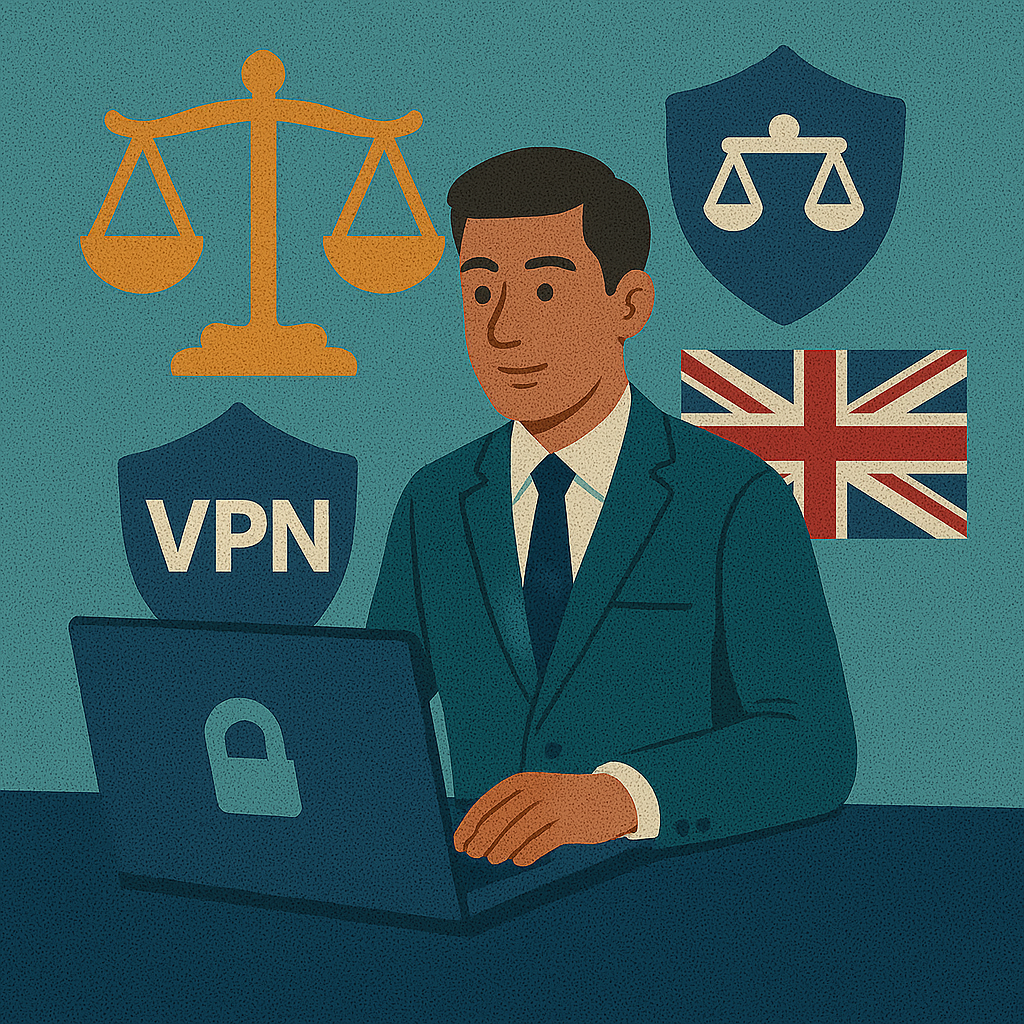
VPN myths in the UK 2026: what British users still get wrong about speed, legality and privacy
Start here
In the UK, the myth usually starts where broadband expectations meet streaming expectations
A lot of British confusion around VPNs comes from mixing together three different jobs: privacy, streaming and general household broadband. Someone reads that a VPN “stops tracking”, another person expects it to fix every streaming problem, and someone else assumes it must always cripple speed on EE, BT or Virgin Media. Those are three different questions, but they often get bundled into one noisy myth.
That is why this page starts with the things British readers actually search for first: legality, BBC iPlayer, free VPN limits, mobile use on trains and hotels, and whether a VPN changes anything meaningful on a normal home connection.
What do UK readers usually ask before they believe or dismiss a VPN?
Is using a VPN legal in Britain?
Yes. Using a VPN itself is legal in the UK. The question is still what you do while connected, not the fact that you used a privacy tool.
Do free VPNs really work for BBC iPlayer?
Usually badly or inconsistently. That is one of the biggest UK-specific myths because free plans are often the weakest fit for iPlayer expectations.
Does a VPN always slow BT, EE or Virgin Media broadband?
No. Some overhead is normal, but nearby servers, lower load and better protocols can keep the drop far smaller than people expect.
A UK reality check: “VPN = illegal workaround” is still one of the laziest myths in the category
British search intent keeps circling back to legality because streaming, public Wi‑Fi and privacy concerns all blur together. The law point is simpler than the marketing noise makes it sound: VPN use itself is lawful. The harder question is whether your expectation is realistic. A VPN is a privacy and routing tool, not a universal bypass button for every service decision or every terms-of-use problem.
British users rarely ask about VPNs in abstract terms. They ask whether a VPN is legal, whether it wrecks EE or BT speeds, whether a free plan can handle public Wi‑Fi, and whether any of this actually helps with BBC iPlayer or travel.
Myth 1: “A VPN always ruins your broadband speed”
That is still one of the most common UK misunderstandings. Yes, a VPN adds overhead, but the experience depends heavily on server distance, load and protocol. On a nearby node, the drop can be modest enough for normal browsing, video calls and public Wi‑Fi use. The only honest way to judge it is to test your own setup with a VPN speed test and check which VPN server to choose.
Myth 2: “If it works for BBC iPlayer once, it works full stop”
This myth survives because people confuse one successful test with a stable long-term pattern. BBC iPlayer is one of the clearest British examples of why streaming and privacy are not the same thing. A VPN can be perfectly fine for public Wi‑Fi and still be mediocre for iPlayer. If the real intent is TV access rather than privacy, the relevant guide is VPN for BBC iPlayer, not a generic privacy promise.
Myth 3: “A free VPN is basically the same as a paid one now”
Not really. Reputable free plans still exist in 2026, but their trade-offs are part of the product, not an accident. Proton continues to position its free tier around unlimited browsing, while Windscribe still markets a 10 GB free plan with a confirmed email. That does not make free plans useless, but it absolutely does not make them equal to paid services for streaming, location choice, or all-day comfort. See free VPN UK, best free VPN UK and free vs paid VPN UK.
Myth 4: “A VPN gives complete anonymity”
A VPN can hide your IP from some observers, but it does not erase account logins, browser fingerprints, cookies or sloppy device habits. That is why “privacy” is the honest word and “invisibility” is the fantasy word. If you care about leak resistance, look at DNS leaks, kill switch and optimal VPN settings.
Myth 5: “A VPN solves public Wi‑Fi by itself”
It helps a lot, but it does not replace device hygiene or judgement. On National Rail Wi‑Fi, hotel portals or café networks, a VPN is a useful extra layer, not a substitute for updates, MFA or basic caution. For the broader British angle, pair it with VPN on public Wi‑Fi, Wi‑Fi security and the Wi‑Fi checklist.
Myth 6: “Mobile VPN apps are mostly a gimmick”
In the UK, that is a poor assumption. Phones and tablets are exactly where train Wi‑Fi, airport sessions, tethering and hotel networks create the clearest case for a VPN. But the app matters. So does reconnect behaviour. So does whether the iPhone or Android client actually behaves cleanly in daily use. See VPN iOS UK and VPN Android UK.
UK myth filter: which claim sounds plausible until you use it on a real British network?
This is the practical decoder, not the cinematic one. Think trains, hotels, EE mobile, BT home broadband and BBC iPlayer expectations.
Myth vs reality
| Claim | What usually holds up | Why the myth fails |
|---|---|---|
| Legality | Using a VPN is legal in the UK | The law issue is about behaviour, not the tool itself |
| Speed | Depends on server distance, load and protocol | “Always slow” is a bad shortcut |
| Free plans | Useful for lighter privacy cases | Weak for iPlayer expectations and all-day comfort |
| Public Wi‑Fi | One of the best cases for a VPN | Still needs basic security habits |
| Anonymity | Improved privacy, not complete invisibility | Accounts, cookies and browser signals still matter |
How a VPN myth usually collapses
Video: a calmer way to think about VPN claims
If the embed does not load, open it on YouTube.
FAQ
Is a VPN legal in the UK?
Yes. Using a VPN itself is legal in the UK for ordinary privacy and security use.
Does a VPN always slow broadband in Britain?
No. The effect depends on distance, server load and protocol, and can be small enough for normal use.
Do free VPNs really work for BBC iPlayer?
Usually inconsistently. That is one of the biggest UK-specific myths because iPlayer is a weak fit for many free plans.
Does a VPN make me anonymous online?
Not fully. It improves privacy, but it does not erase account logins, cookies or browser fingerprints.
Is a VPN worth using on trains, hotels and cafés?
Yes, that is one of the clearest practical use cases.
Are iPhone and Android VPN apps actually useful?
Yes, especially on public networks and travel days, but the app quality matters a lot.
Does a VPN replace Wi‑Fi security habits?
No. It helps, but it should sit alongside updates, MFA and cautious network use.
Should I judge a VPN only by streaming success?
No. Streaming is one signal, not the whole picture.
Want to test a service against real use instead of myth?
If your actual goal is cleaner public Wi‑Fi, steadier apps and fewer compromises than a random free plan, test a reputable provider against your own routine rather than a headline promise.
Disclosure: these are affiliate links.

About the author
Denys Shchur writes practical VPN and privacy guides for readers who want plain-English answers instead of theatre. This UK version focuses on law, broadband expectations, iPlayer and public Wi‑Fi reality.